Home » Calls to action (Page 6)
Category Archives: Calls to action
Take a time out to look for Praying Mantis egg sacs
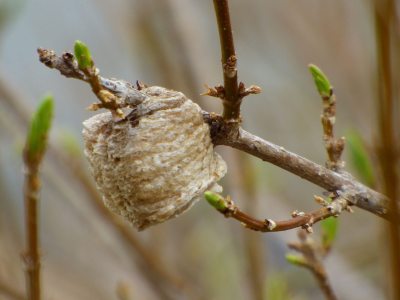 Last week while sauntering (Thoreau style) along a reforested part of Howard County, my eye was attracted to a very small tan blob attached to a small branch of a tree. It took me a few moments to realize this stiff, foamy mass was an egg sac. In fact is was a praying mantis egg sac and could contain up to 300 eggs. I tried to remember when they are created and when do they hatch. I wasn’t sure. I placed the sac in my jacket pocket planning on giving it to my grandchildren later that day (pre-lockdown). Might be fun I thought.
Sure enough we all took a walk later in the day and at one point I put my hand into my pocket and remembered my plan. The 5 year old certainly knew what a mantis was from last summer – but was fuzzy about how the two related. But she was excited and promised to take it home and watch it hatch – assuming it was still viable. Several days later my daughter say the sac and put it into a pint jar with a fine mesh lid.
 The very next morning everything changed. The jar was full of mini mantises. She had put it in a jar just in the nick of time, they were streaming out of the egg sac, and just kept coming. I quickly got a call and via FaceTime got to enjoy the excitement. “What do they eat grandpa? We’ve got to feed them now.” We guessed that we needed to capture some of the bugs that were starting to swarm on the porch. It quickly turned into a neighborhood quest – plenty of babies to go around even with turning dozens lose for keeping the gardens free of more harmful pests throughout the summer.
Turned out this was a blessing for all the neighbors – a little excitement during a period of corona lockdown. Great opportunity for community and solo research without leaving one’s own backyard.
Looking for signs of life on a cool March day
 January 4, 2020
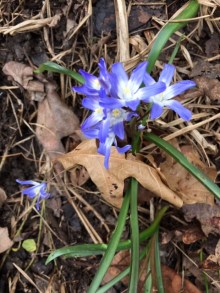
Yes, we were some of the few people out and about today looking for signs of life in mid-winter. We saw squirrels, we heard red-shouldered hawks and kingfishers, and we found all sorts of bright pistachio green mosses among the leaves covering the brown and gray forest floor.
We also planted acorns, shouted through a long culvert, and examined a freshly built beaver lodge. It is amazing how much mud beavers move to pack in the spaces between all the branches they cut, dragged, and piled up along side of the lake. There is always much to see on a walk through the woods if one is not distracted by stuff happening in the greater world.
![IMG_8780[1]](https://savingtheplaces.com/wp-content/uploads/2020/03/img_87801.jpg?w=205&h=273) March 28, 2020
March 28, 2020
What a lifetime has transpired since my last entry. Not the least of which is Covid-19, a species-jumping virus probably resulting from loss of habitat and overcrowding on a finite Earth. My life has turned upside down and I have struggled, trying to keep being purposeful in all that I do. I still try to inspire people to act on slowing down the warming of our climate, but most people I encounter are really numb from all the virus data and opinions that they see. They struggle to find sources that will tell them the truth about the pandemic. This is another crisis, much like the climate crisis, where we really want to know the scientific facts and how to adjust our individual behaviors to improve the outcome.
But at the same time, I need to keep centered, productive, and healthy, and that means I crave my daily walk outdoors for my mental, physical, and biological health.
![IMG_8759[1]](https://savingtheplaces.com/wp-content/uploads/2020/03/img_87591.jpg?w=227&h=303) As I wander in nature, I see that there are still a lot of grays and browns in the forest. The beeches spread throughout the woods still wear their light tan, markescent leaves – the last vestiges of winter. The meadows wave their russet grasses in the light breeze, and the kingfisher calls as it darts along the edges of the lake. Yet now that the season has changed there are many incipient stages of spring everywhere I look. Snowdrops and crocus flowers have given way to pink spring beauties, Virginia bluebells, white bloodroot, and yellow woodland poppies. The understory shrubs are trying to get the jump on the taller canopy species. Yellow spicebush, redbud, and white shadblow are all sprouting their flowers, and even the maples are flowering and the poplars are leafing out. Solitary bees are churning up the soil, and small brown snakes and snapping turtles are lying in wait, looking for a chance to wriggle across the path.
As I wander in nature, I see that there are still a lot of grays and browns in the forest. The beeches spread throughout the woods still wear their light tan, markescent leaves – the last vestiges of winter. The meadows wave their russet grasses in the light breeze, and the kingfisher calls as it darts along the edges of the lake. Yet now that the season has changed there are many incipient stages of spring everywhere I look. Snowdrops and crocus flowers have given way to pink spring beauties, Virginia bluebells, white bloodroot, and yellow woodland poppies. The understory shrubs are trying to get the jump on the taller canopy species. Yellow spicebush, redbud, and white shadblow are all sprouting their flowers, and even the maples are flowering and the poplars are leafing out. Solitary bees are churning up the soil, and small brown snakes and snapping turtles are lying in wait, looking for a chance to wriggle across the path.
![IMG_8784[2]](https://savingtheplaces.com/wp-content/uploads/2020/03/img_87842.jpg?w=213&h=284) Yes, the seasons change and the challenges persist, but so do the plants and animals. It does my heart good to see these changes, and I am so glad not to miss out on them by being distracted with all the worries people share. My hope for you is that you can find a place in nature and take the time to attune yourself once again with the rest of life on the planet. Maybe then we can each rededicate ourselves to change our behaviors and to take the steps needed to fight the virus and preserve our climate.
Yes, the seasons change and the challenges persist, but so do the plants and animals. It does my heart good to see these changes, and I am so glad not to miss out on them by being distracted with all the worries people share. My hope for you is that you can find a place in nature and take the time to attune yourself once again with the rest of life on the planet. Maybe then we can each rededicate ourselves to change our behaviors and to take the steps needed to fight the virus and preserve our climate.
How will we change through the crisis?

Photo by Sharefaith on Pexels.com
This coronavirus crisis represents a critical time in the evolution of our society, or at least changes in our behaviors and our culture. We need to change in many ways to continue living in balance with the planet and this challenge provides us with a great opportunity to do just that. However, we could also slide in the wrong way. Please join me in identifying both the good and the bad that could happen over the next year to 18 months.
- We might realize that we are all in this together and pull together to combat this virus. We could then apply that realization to other critical challenges, e.g., climate change, other pandemics, income inequality, racial inequality, and gender inequality.
- On the other side of the coin, we might not learn how to work together and our democracy might fail.
- We might realize that commuting to an office is expensive, inefficient, and dangerous to our health and to the planet. We all might switch to working from our homes, saving us time, costs, and energy. As a result, we would dramatically reduce our dependency on and misuse of fossil fuels. Our greenhouse gas emissions would drop, and the related health impacts and premature deaths would decrease as well.
- We might all make the switch to having our groceries delivered to our homes – a big time and cost saving step. Just think of how much more time you will have if you didn’t have to commute or shop.
- We might find different ways to educate ourselves and break down the barriers and costs to online learning.
- We might find a way through the cumbersome medical arena that works for all the people.
- We might all learn how to take care of each other (especially single people and the elderly), learn how to check in more often, and use video-conferencing for all sorts of things.
- We might have fallen in love with the great outdoors by the end of this crisis, and we might all be heathier and have adopted heathier outdoor activities as a result of this period of time.
- The international community, and especially the public health systems, should be stronger and better interconnected as a result of this experience and hopefully will be able to respond and work much better together on a full range of challenges that are global in nature.
This is just a start. So after you have taken all the actions you can do to slow the spread of the virus please send me your ideas of how things might change. Send to ned@sustainable.us. We have to make the most of a bad situation. So let’s think of where we want to be 6 months or 18 months from now and make sure our actions help us get there.
Ned Tillman is a climate and health advocate, a blogger, and an award-winning author. His latest book, The Big Melt, describes how a community can come together to help everyone fight a threat to their community.
The Global Virus vs Global Warming – What can we learn?
 Both the current pandemic and on-going global warming threaten hundreds of thousands if not millions of people all around the world. Numbers so large that we tend to get immobilized and numb to the statistics that change everyday. But there is a lot we can do and need to be doing everyday to fight both of these tragedies.
Trying to get some perspective on these challenges, I have noticed that there are many parallels between these two crises. One appears to be more urgent in the short term (months), and the other more significant in the longer term (years), but both require immediate responses right now- in developing and implementing a plan of attack. So what can we learn from each of these crises to help us fight both of these global challenges at the same time?
- Our federal government dismissed both crises initially.
- They came late to the novel coronavirus crisis, putting many people at risk. They are still ignoring the climate crisis and are pursuing strategies that will make it worse – putting many more people at risk.
- The federal government is struggling to figure out what strategies to pursue against the pandemic. They are still delaying action for fighting global warming except for a promise to plant trees.
- Both crises require real leadership at the local, state, federal, and global levels and extensive professional cooperation and collaboration between all countries is critical.
- Both crises require significant actions by each and every one of us. Many of us are taking both of these crises seriously and taking steps that will help. Some of us don’t think either crisis is real.
- Both crises offer us the opportunity to reinvent ourselves and create a more successful future – one more in balance with the realities of the limits on our natural resources and our impacts on the Earth.
- The solutions to these crises are complicated and will require the best science and scientists to solve.
- They both will require us all to take action.
- The sooner we act, the lesser the damage and the greater the chance that we can recover.
As we continue to learn more about the pandemic, let’s keep in mind lessons learned from fighting both crises. Let’s put solutions into effect that will benefit both fights. In any stimulus package, let’s incentivize the practices (working from home, less travel, etc) and the businesses (clean energy, flexible manufacturing) which we need to solve both crises. Let’s act as effectively and timely as we can. This is the time to shift our society to a more sustainable one. These are big problems that will affect the entire human race. It’s time for us all to come together to solve them both.
Carbon Sequestration
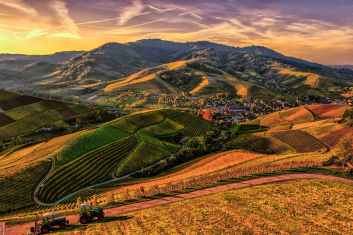
Photo by Christian Heitz on Pexels.com
Farmers all across the country can play a big role in sequestering carbon in their soils and in their trees. It is a great way to get the carbon out of the air and back into the Earth. Many farmers are taking steps to do this already – they are building up the organic matter in their soils by planting cover crops and following no-till farming practices. These steps make their soils richer and more productive, reduce stormwater, chemical, and silt runoff, and lock up carbon for years.
It would be great to encourage all farmers to adopt these practices. Many counties across the country are already encouraging these practices via education and incentives. We should be encouraging these practices – ask your local officials what they are doing about working with farmers on this issue. The Agricultural sector has a major role to play in reducing carbon in the atmosphere and we can help incentivize farmers to implement these practices while increasing the quality of our food supplies.
Of course we can also sequester carbon in our own backyards and front yards as well. We need to move beyond grass! Lawns currently dominate our landscapes. Today, more land is tied up in grass-covered yards than land used for any other crop in the eastern US -what a waste. Lawns are basically ecological desserts. Check in with your local Master Gardeners or Master Naturalists to learn about the best practices in your area. You will be pleased to find out how you can move away from the ecological grass deserts to healthy yards full of native flowers, shrubs, and trees. You will be helping to save the birds and butterflies in the process. We have lost so much habitat as a result of suburbanization that most species are in decline. We can save the birds at the same time as we save our “goldilocks climate” by sequestering carbon.
Waste, sustainable practices, business, and you

Photo by Magda Ehlers on Pexels.com
I encountered 1000s of plastic bottles on a canoe trip once and swore that I would never buy another drink in a plastic bottle.
That is very hard to do, but I remember that image in the river every time my hand reaches for a drink in a bottle that’s destined to end up in the trash in about 10 minutes. As a result I have cut down on about 90 percent of my plastic bottle purchases. I have been able to do this by using water fountains and taking a reusable water container wherever I go.
But that is only one small part of the waste stream we are all responsible for. We have a real waste problem in this country and it all contributes heavily to our climate crisis. It costs us a great deal of money and carbon emissions to ship all the waste to landfills and landfills create a lot of methane (a potent greenhouse gas) as the waste degrades. We need to move beyond that concept of waste disposal to one of waste prevention.
Consumers have a big role to play in reducing our wastes as do businesses. Never forget, consumer demand drives business – we have the power to direct which businesses succeed. We therefore need to send clear messages with each of our purchases.
- Don’t buy things unless you need them – this sounds so simple, but… Don’t let the marketing trick you into impulse buying of stuff you really don’t want or need.
- Consider buying things that are easily reused or recycled – This represents a great opportunity for new or more enlightened businesses.
- Always ask if there is a more sustainable option – More business opportunities.
- Don’t support businesses who are not committed to a sustainability business plan.
- Wean yourself off of fossil fuels, plastics, wasteful packaging.
- Compost your food wastes – makes great fertilizer.
- Reduce meat consumption – I cut back about 60% – it isn’t hard and is healthier.
- Reorder your investment strategy based on environmental and climate goals. This is also easy to do – ask your financial advisor.
The efforts now going into reducing single-use plastics is just one example of the positive energy of people who are responding and trying to deal with these problems. We need to support their efforts, help to expand them, and get more businesses on board..
Failure of Our Trade Deals
Photo by Pixabay on Pexels.com
The biggest failure of the trade deals of the past 30 years (e.g., NAFTA) is that we have not required nor successfully monitored/enforced environmental regulations on the countries we are trading with. As a result, “clean” manufacturing here in the US has been put at a disadvantage to “dirty” manufacturing in other countries. Whereas this has helped us to dramatically clean up our local air, rivers, and soils, it has not been as effective as these agreements could have been for reducing global emissions of greenhouse gases. This was a major opportunity lost for curbing greenhouse gases on an international basis.
You would think we would have learned our lesson – trade and the health of our climate are one and the same thing. And yet we are signing new trade pacts (e.g., Mexico-Canada and China) that could have been a big step forward on curbing GHG emissions but they do not. If we allow this to happen it will be another major opportunity lost. It makes me sick to think how short-sighted we are. We need to have a loud outcry from labor, environmental groups, health organizations, farmers, manufacturers, and the general public that this is not acceptable. Call your representatives now to fix these major trade deal catastrophes before they go into effect.
Complete Interview discussing The Big Melt
 I was recently interviewed by Sophia D’Alonzo and the interview was filmed by Fin Stein. Even though parts of the interview were posted on Facebook, Instagram, Twitter, and LinkedIn. The whole 10-minute interview was not. So for those of you who would like to see the whole interview, please click here.
The interview touches on literary questions about The Big Melt as well as the importance of climate fiction in facing the challenges of today and tomorrow. We hope you will read this book and be inspired to take actions that will preserve our “goldilocks” climate that is the basis for our modern civilization.
Why Buy Carbon Offsets
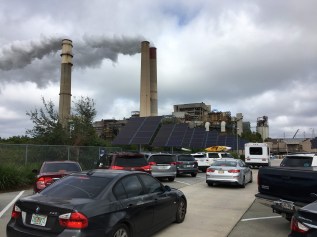 In addition to doing everything you can to reduce your carbon footprint and to get businesses and our government to reduce theirs, you can also offset the rest of your carbon usage by buying carbon offsets for the 20-30 metric tons of carbon you still generate. Fortunately, this is also easy and quick to do. For a few hundred dollars you can offset the carbon you still emit by supporting low carbon projects throughout the world that will benefit local people and reduce global emissions at the same time.
I wanted to offset the travel my family did to all get together for the holidays. It took me 20 minutes to research projects that made sense to me and then I gave the offsets to each member of my family as a gift and to introduce them to this concept. They got it. They had not done it before but I bet they will in the future.
There are only 4 steps between you and carbon neutrality. This does not mean you stop trying to reduce your own emissions – that is still key – especially for Americans who use the most energy per capita on the planet. Here is all you have to do:
- Go to https://www.goldstandard.org/take-action/offset-your-emissions – they help ensure your investment is going to vetted organizations. This is important.
- Scroll down to a project(s) you like. If you don’t want to have to sort thru 20+ possible choices, here are 2 to consider:
-
- Climate+ Portfolio of Projects for $11/Metric tonne
- Solar Cooking for Refugee Families for $15/Metric tonne
- Select the number of tons you want to offset. Click “Add to cart”.
- Go to cart, check out, and pay.
Try it. There are many projects overseas that deserve your support and we cannot do it all here. We need to create a global behavior shift, not just a local one. (Thanks to K. Crandell)
Switch electricity supplier to 100% solar or wind

Photo by KML on Pexels.com
Last week we discussed some basic ideas of how to reduce your carbon emissions. To reach the goal of slowing down the heating of our atmosphere, we also need to take a look at how much carbon we generate and find even more ways to reduce it. Our carbon dioxide emissions per person are about 3 times the world average so we can be real leaders in becoming more efficient and far less damaging to the atmosphere.
I suggest you take the time and calculate your carbon footprint – it is an informative process that will take about 20 minutes and will tell you where to focus your efforts. You will probably find that your main uses are for transportation (fuel) and for heating and cooling your home (usually with natural gas, oil, coal, or electricity – generated from a range of fuels). Each of us has a big opportunity for reducing our carbon footprint by reducing our dependency on fossil fuels and moving toward solar and wind generated electricity.
There has been a big effort over the past decade to deregulate utilities to allow you more choice in what energy supplier you use. Many states have deregulated their energy suppliers. They include New York, Pennsylvania, Maryland, Delaware, Massachusetts, Connecticut, Maine, New Hampshire, New Jersey, Illinois, Texas, Virginia, Rhode Island, D.C., and Ohio. https://www.saveonenergy.com/state-information/
After deregulation, we electricity consumers lucky enough to be in one of those states have been able to change suppliers. Our local utility still delivers electricity to our home but we stopped buying our energy from them since they largely generate energy from fossil fuels (coal, oil, and natural gas) and nuclear. We decided to switch to solar and wind suppliers. This took only a few minutes to do – all online. For the past 10 years we have used various vendors at a cost comparable to our local utility. If you are in one of these states you can probably do this too. Check out Inspire, Green Mountain Energy, Clean Choice, etc. There are dozens of firms who can supply you with clean and renewable energy. This is probably one of the easiest things you can do to lower your carbon emissions and help accelerate the movement toward renewables.
This past year another option has become available to us living in Maryland – you might want to check it out where you live. There are community solar firms who you can sign up with who build local solar arrays and sell you their electricity. The one we signed up with is Neighborhood Sun, but there are others – check them out.
Both options reduce the burning of fossil fuels and are very simple to sign up for. We also found out that it is easy to switch back to the utility if desired. We have never had a disruption in service and have dramatically lowered our carbon footprint.
 Saving The Places